


This post is brought to you by ViewQwest.
Before every decisive shot comes the work no one sees. Natalie’s story reflects a shared belief with ViewQwest in preparation, precision and the support systems behind lasting performance.
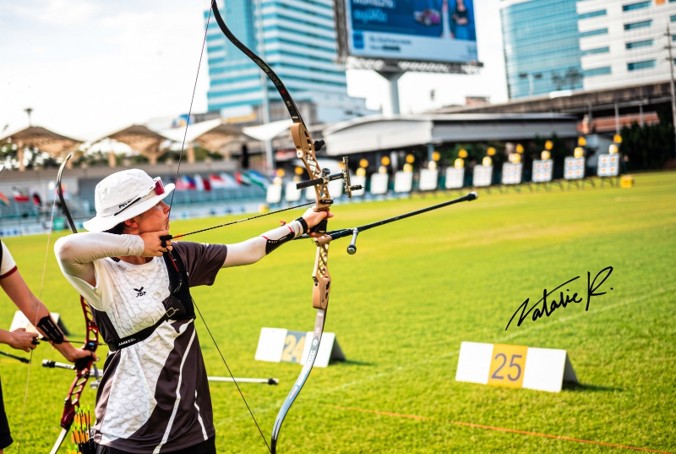
Singapore Archery Open. Gold medal match. Scores are tied. One shot left. Seventy metres stood between Natalie Ruzsicska and the gold medal, but her job was not to think about that.
She steps up to the shooting line. Her feet settle into place, and the bow rises. The string is drawn. For a few short seconds, everything else fades away, leaving only the sight pin hovering over the target.
Then the clicker snaps. The arrow whips forward and finds its mark. Gold. The world snaps back into existence.
To the spectator, the moment is over almost as soon as it begins. For Natalie, those seconds carry years of work: the form trained into her body, the habits she has had to unlearn, the pressure she has learned to manage, and the routines that keep bringing her back to the line.
Her story is not only about talent or ambition. It is about the quiet, consistent work behind performance, and the systems of support that make it possible.That made her a natural fit to become a ViewQwest brand ambassador, whose own performance story is built not only on network infrastructure, but on the people and systems behind it.
Before the bow
Before archery became the focus, Natalie had already learned the value of structure. Taekwondo filled much of her childhood, eventually taking her to the junior black belt rank of 3rd Poom.
That same appetite for discipline and technical precision carried into school. Natalie entered the School of Science and Technology, Singapore, and was later selected as part of an SST team for the Endeavour Scholarship programme, representing Singapore at Space Camp in Huntsville, Alabama. She is now pursuing aerospace engineering.
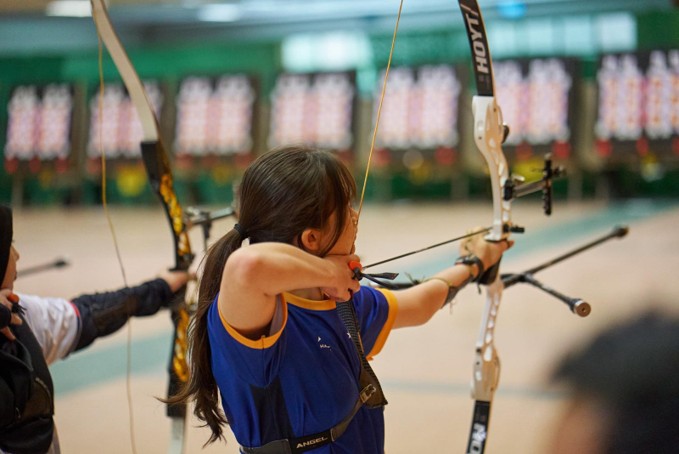
Archery, however, entered her life almost by accident. Natalie had been watching the Tokyo Olympics with her family when they came across the archery broadcast. Korean archer An San, who would become one of her sporting heroes, caught their attention. Before long, the whole family was hooked.
“We all became fans at the same time,” Natalie recalls.
What began as curiosity turned into a one-hour fun shoot, then a basic course, and eventually regular coaching sessions. Her father, Adrian Ruzsicska, recognised early that correct form mattered. In a sport where the smallest errors can compound quickly, getting the basics right was not optional.
What makes the decisive moment
Natalie’s interest in aerospace engineering has also shaped the way she thinks about performance. She remembers waking up with her father at 6.30am to watch a rocket launch, struck by how much work had gone into a single moment of flight.
Over time, the parallels with archery became clear. In both aerospace and archery, the visible moment is only the final expression of everything that came before it: preparation, precision, testing, adjustment and trust in the system.
It reinforced a belief Natalie had developed from a young age: that performance is built through small, disciplined actions repeated over time, often long before anyone sees the result.
This is a perspective that also makes her connection with ViewQwest more meaningful. For most people, a fast and stable connection is only noticed when it works exactly as it should. Behind that experience is the less visible work of planning, engineering, monitoring, maintenance and support, the kind of groundwork that allows performance to feel effortless when it matters.
When progress looks worse first
Athletes often have to accept that getting better does not always look like getting better.
Recently, Natalie has had to adjust her form under a new coach. That means asking her body to stop relying on movements it had already learned by memory, and to rebuild parts of her technique from the ground up.
In the short term, scores can dip and confidence can waver. The process can feel like moving backwards before it becomes progress. But Natalie sees the bigger picture. She accepts the temporary setbacks because she trusts her coach and believes the changes will take her further.
“If I’m going to have a few failures to get me there, it’s okay.”
Excellence is not only about clean shots. It is also about knowing how to respond to the bad ones before one mistake turns into the next. In archery, that means understanding what can be corrected, what has to be adjusted for, and what cannot be allowed to follow you into the next shot.
Her self-talk is simple. “Okay, that wasn’t a good shot. But I can do better,” she says.
The sacrifices and support no one sees
With her packed schedule, discipline is required outside the range too. As part of the youth team, Natalie needs at least 16 hours of shooting each week, though the ideal is closer to 30. With irregular polytechnic timetables during the school term, revision and sleep to manage, that is not always realistic.
The constraints have forced her to be deliberate. At school, she uses the gaps between classes to revise. At the range, she focuses on quality over quantity. Her training log helps her study each session more closely, especially when she does not always have the luxury of shooting hundreds of arrows a day.
At home, time together is also protected. Sunday dinners are non-negotiable. Adrian’s involvement goes further than most parents. He shoots competitively and has become a Level 1-certified archery coach, believing that a deeper understanding of the technical, equipment and mental demands of the sport would help him better support Natalie.
For a young athlete balancing school, training and competition, support has to be practical. Encouragement matters, but so do the resources that make it possible to keep improving: the right equipment, access to competition, and exposure to different conditions and opponents overseas.

That is where ViewQwest’s support is intended to make a difference. As Natalie works towards her long-term Olympic goal, the partnership will help support her equipment needs and provide more opportunities to gain international competition experience.
“Performance is often judged in the moment, but it is built long before that moment arrives,” said Jurist Francisco, Chief Operating Officer. “Natalie’s journey reflects the same belief that has shaped ViewQwest over the years: that lasting performance depends on preparation, precision, resilience and the right support behind you. As a homegrown Singapore brand, we are proud to support a young athlete with the discipline to keep aiming higher, and to play a part in giving her the resources and exposure she needs as she continues to compete on the international stage.”
The target beyond the target
Natalie’s target is clear: the Olympics. But she also hopes to be remembered not only as an athlete who wins, but as someone who stays positive when things are difficult, enjoys the sport beyond its outcomes, and encourages others as part of One Team Singapore.
While archery is inclusive in spirit, the sport still has room to grow in Singapore. Greater access to equipment, coaching, competition exposure and public awareness could help more young people discover it. For Natalie, the partnership with ViewQwest is also a chance to bring more visibility to the sport, and to show that the journey of an athlete is built as much on support and opportunity as it is on talent.
Asked what she would tell her younger self, Natalie returns to her first competition, before expectations entered the picture. She would tell herself to hold on to the spirit of that moment: no pressure, no weight of expectation, just the chance to step up and see how well she could shoot.
For Natalie, “doing your best” is far from a platitude. It means trusting the thousands of hours that came before: the training, the corrections, the difficult form changes, and the support system that made the work possible.
It also means remembering that the work itself is not something she takes for granted.
“Being grateful is underrated,” she says. “And being able to play this sport is a big blessing.”